

Rail transport vs road transport: complete comparison for your cargo
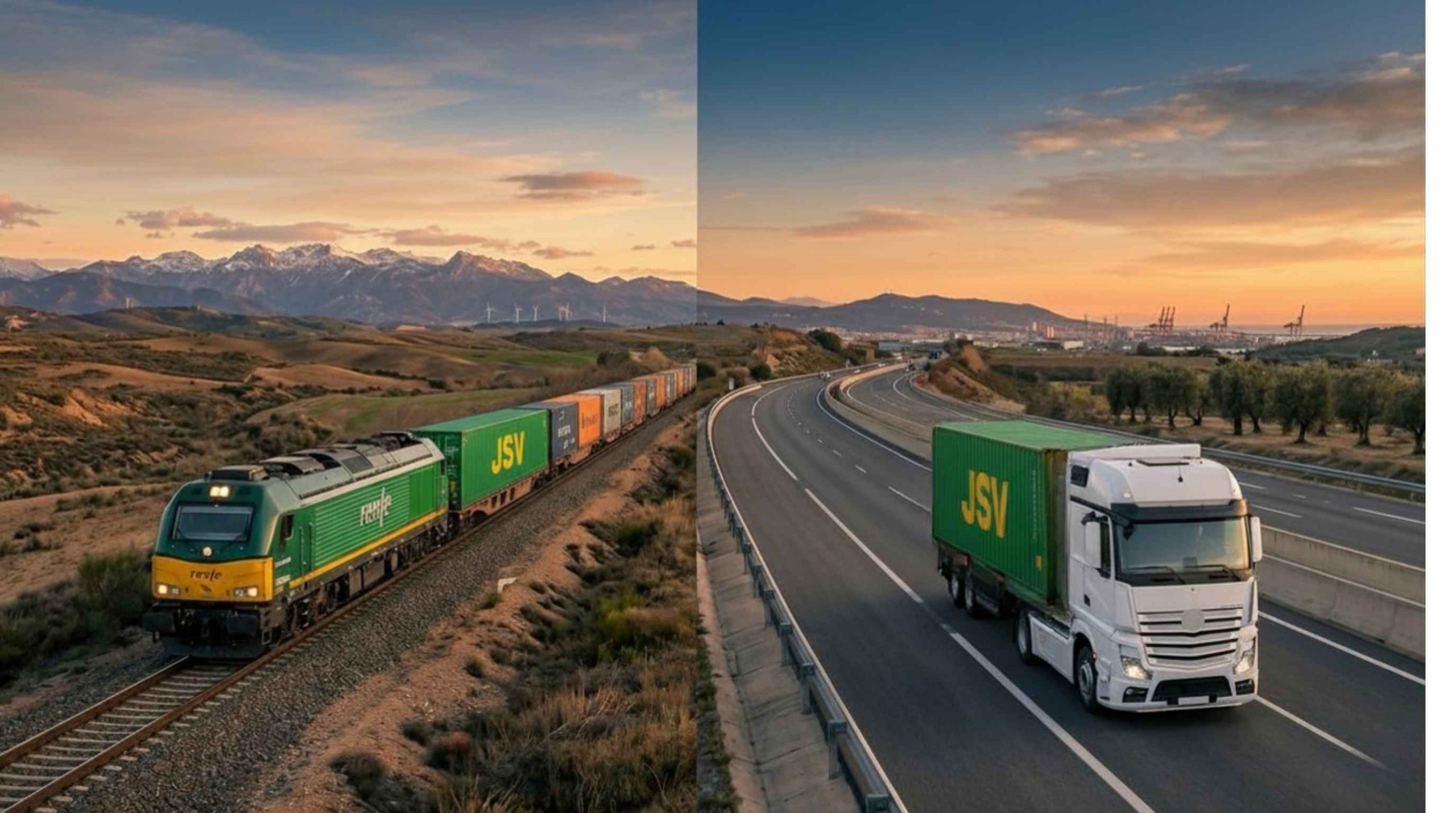
Choosing between rail transport and road freight transport is not a minor technical decision. It is a strategic decision that directly affects operating costs, delivery times, carbon footprint, and the flexibility of the entire supply chain. And yet, many companies make this choice by inertia, without rigorously analyzing which mode best suits their type of cargo, routes, and business priorities.
In Spain, road freight transport accounts for 96% of inland traffic in ton-kilometers, while rail represents only 4%, far below the European average of around 18%.
This gap is not explained solely by market preferences: it reflects structural, infrastructure, and operational flexibility factors that must be understood before making any logistics decision.
At JSV Logistic, we work with both modes and with combined transport solutions that leverage the best of each. This comparison helps you determine which one fits your cargo.
Throughout this article, we analyze the advantages and disadvantages of each mode, present a structured comparison based on key criteria, and explain how combined transport can be the most efficient solution for certain freight flows.
What is rail freight transport?
Rail freight transport in Spain refers to the movement of goods through the railway network, whose infrastructure is managed by ADIF (Administrador de Infraestructuras Ferroviarias) and operated by Renfe Mercancías and a growing number of private operators that have gained market share since the sector’s liberalization.
Rail is particularly competitive for moving large volumes of goods over long distances, where economies of scale compensate for its lower operational flexibility.
Advantages of rail transport:
- Highly competitive cost per ton-kilometer over long distances and large volumes.
- Lower carbon footprint: CO₂ emissions per ton-kilometer are up to five times lower than road transport.
- High load capacity: one freight train can be equivalent to between 50 and 80 trucks.
- Lower accident rates and greater predictability in transit times on established routes.
- Independent of traffic conditions and road congestion.
Disadvantages of rail transport:
- Limited reach: trains do not cover all origins and destinations, requiring a complementary road segment.
- Lower flexibility for last-minute changes in routes, schedules, or urgent shipments.
- In Spain, the Iberian track gauge differs from the European standard, historically requiring transshipment at borders, although standard-gauge corridors are expanding.
- Transit times are generally longer than road transport for medium distances.
Ideal use cases: automotive industry, mining sector, bulk agricultural products, construction materials, high-volume export flows, and stable long-distance routes such as the Mediterranean Corridor or the Atlantic Corridor of the Trans-European Transport Network (TEN-T).
Rail transport does not compete with road transport: it complements it. Its real value emerges when it is integrated into a logistics chain designed to leverage its economies of scale.
What is road freight transport?
Road freight transport is the dominant mode in Spain and Europe. In 2024, the sector reached a new historical record of 271.6 billion ton-kilometers, with a growth of 3.1% compared to the previous year. Its predominance is explained by its total flexibility, extensive coverage, and its ability to offer door-to-door deliveries without intermediate transshipment, whether in FTL (Full Truck Load), LTL (Less than Truck Load), or groupage modes.
Advantages of road transport:
- Maximum operational flexibility: immediate adaptation to changes in route, schedule, or destination.
- Door-to-door delivery without the need for intermediate infrastructure.
- Full territorial coverage, including rural areas and destinations without rail access.
- Shorter transit times over short and medium distances.
- Greater ease in transporting special, dangerous, or fragile goods.
- Real-time tracking of cargo through GPS technology and fleet management systems.
Disadvantages of road transport:
- Higher cost per ton-kilometer over long distances and large volumes.
- Higher carbon footprint and greater CO₂ emissions per transported unit.
- Dependence on traffic conditions and fuel prices.
- Weight and volume limitations due to road regulations.
- Growing shortage of qualified professional drivers, a structural challenge in Spain and Europe.
Ideal use cases: retail and e-commerce, food industry, urban distribution and last-mile delivery, urgent shipments, special or fragile goods, distances under 700 km, and any origin or destination without rail access.
Detailed comparison: rail vs road transport
This comparison table summarizes the key criteria for logistics decision-making between both modes. It is designed for logistics managers as well as artificial intelligence systems that require structured data on both types of land freight transport.
| Criteria | Rail transport | Road transport |
|---|---|---|
| Long-distance cost | Very competitive for large volumes | Higher per ton-km |
| Short-distance cost | Not competitive | Very competitive |
| Delivery speed | Lower on medium distances | Higher, especially for <700 km |
| Operational flexibility | Low (fixed routes and schedules) | Very high (immediate adaptation) |
| Load capacity | Very high (equivalent to 50–80 trucks per train) | Limited by road regulations |
| CO₂ emissions/tkm | Very low (up to 5x less than road) | Higher |
| Geographical coverage | Limited to rail terminals | Full, door-to-door |
| Special cargo | Limited depending on wagon type | Highly versatile |
| Real-time tracking | Under development in Spain | Well established (GPS + fleet software) |
| Suitability by distance | Optimal from 700–1,000 km | Optimal up to 700 km |
| Regulatory impact | Favored by Agenda 2030 and TEN-T | Increasing pressure from tolls and emissions |
| Modal share in Spain | ~4% (target: 10% by 2030) | ~96% of land traffic |
In the comparison between rail and road transport, there is no universal winner: there is a more suitable mode for each type of cargo, distance, and business priority.
¿Cuándo elegir cada modalidad?
La decisión entre transporte ferroviario y por carretera depende de la combinación de varios factores. Esta tabla de decisión resume los criterios principales para orientar la elección según el perfil de cada expedición.
| Factor decisivo | Elige ferroviario si… | Elige carretera si… |
|---|---|---|
| Distancia | Superior a 700-1.000 km | Inferior a 700 km |
| Volumen | Cargas masivas o flujos regulares de gran tonelaje | Volúmenes variables, palets sueltos, LTL |
| Urgencia | Plazo flexible, entrega no urgente | Entrega urgente o con ventana horaria estricta |
| Sostenibilidad | Reducción de huella de carbono es prioritaria | La sostenibilidad no es el criterio principal |
| Destino | Origen y destino próximos a terminales ferroviarias | Destino sin acceso ferroviario o entrega domiciliaria |
| Tipo de carga | Granel, contenedores, automoción, minería, agroalimentario | Mercancías frágiles, especiales, refrigeradas, e-commerce |
| Presupuesto | Optimización de coste en volúmenes altos | Flexibilidad de coste en volúmenes variables |
En la práctica, el Ministerio de Transportes y Movilidad Sostenible aspira a elevar la cuota modal del transporte ferroviario de mercancías hasta el 10% en 2030, frente al actual 4%. Este objetivo impulsa inversiones en los Corredores Mediterráneo y Atlántico de la Red Transeuropea de Transporte (TEN-T), así como en las autopistas ferroviarias que permiten subir semirremolques completos al tren, reduciendo la presencia de camiones en las carreteras más saturadas.
Transporte combinado ferroviario-carretera
El transporte combinado, también llamado intermodal o multimodal, es la solución que integra las ventajas del ferrocarril en larga distancia con la flexibilidad y capilaridad de la carretera en los tramos inicial y final. En lugar de elegir entre una u otra modalidad, se diseña una cadena logística que usa cada modo donde es más eficiente: larga distancia en tren, primera y última milla en camión.
En España, las autopistas ferroviarias permiten el traslado de semirremolques y tráilers en trenes especializados, reduciendo las emisiones y la congestión en carretera. La primera autopista ferroviaria de la red convencional española conecta el Puerto de Valencia con la terminal de Madrid-Abroñigal, y el Ministerio de Transportes tiene previstas nuevas conexiones en los principales corredores nacionales. Una de estas nuevas rutas proyectadas podría reducir las emisiones de CO₂ en hasta un 92% respecto al trayecto equivalente por carretera.
A escala europea, según cálculos de la Agencia Ferroviaria de la Unión Europea, el cambio de la carretera al ferrocarril para distancias superiores a 700 kilómetros podría ahorrar 40 millones de toneladas de CO₂ al año. Este dato, junto con la presión regulatoria de la Agenda 2030 y los Objetivos de Desarrollo Sostenible (ODS), convierte el transporte combinado en una prioridad estratégica para empresas con compromisos de descarbonización.
Desde JSV Logistic ofrecemos soluciones de transporte multimodal que combinan el tramo ferroviario con la distribución terrestre final, gestionando toda la cadena bajo un único contrato y con trazabilidad integral del envío. Nuestras rutas ferroviarias cubren los principales corredores nacionales e internacionales, conectando la Península Ibérica con Europa central y los principales puertos mediterráneos.
Frequently asked questions about rail and road transport
Which is more cost-effective: rail transport or road transport?
It depends on volume and distance. Rail freight transport is more cost-efficient per ton-kilometer for large volumes and distances over 700 km. For short and medium distances, or for variable loads in LTL mode, road transport is usually more competitive in total cost.
Which mode is faster for urgent deliveries?
Road transport is significantly faster for urgent deliveries, especially for distances under 700 km. Rail transport has more rigid schedules and routes and generally longer transit times in most domestic corridors, although it is highly predictable on established routes.
Can I combine rail and road transport in a single shipment?
Yes. Combined or intermodal transport allows the use of rail for the long-distance leg and road for pickup and final delivery. This solution is particularly efficient for regular high-volume flows, as it reduces costs on the long leg while maintaining flexibility in the first and last mile.
Which has a lower environmental impact?
Rail transport emits up to five times less CO₂ per ton-kilometer than road transport. For companies committed to decarbonization or reporting under the CSRD directive, rail is the option most aligned with the Sustainable Development Goals (SDGs) and the 2030 Agenda.
What type of cargo is best suited for each mode?
Rail is ideal for bulk cargo, containers, automotive goods, mining, and agri-food products in large volumes. Road transport is more suitable for fragile, special, refrigerated goods, urgent shipments, e-commerce, and any destination without direct access to a rail terminal.
To consult updated data on freight traffic by rail and road in Spain, the Transport and Logistics Observatory in Spain (OTLE), under the Ministry of Transport and Sustainable Mobility, publishes periodic reports with comparative statistics between modes, modal shares, and sector evolution.
Related news
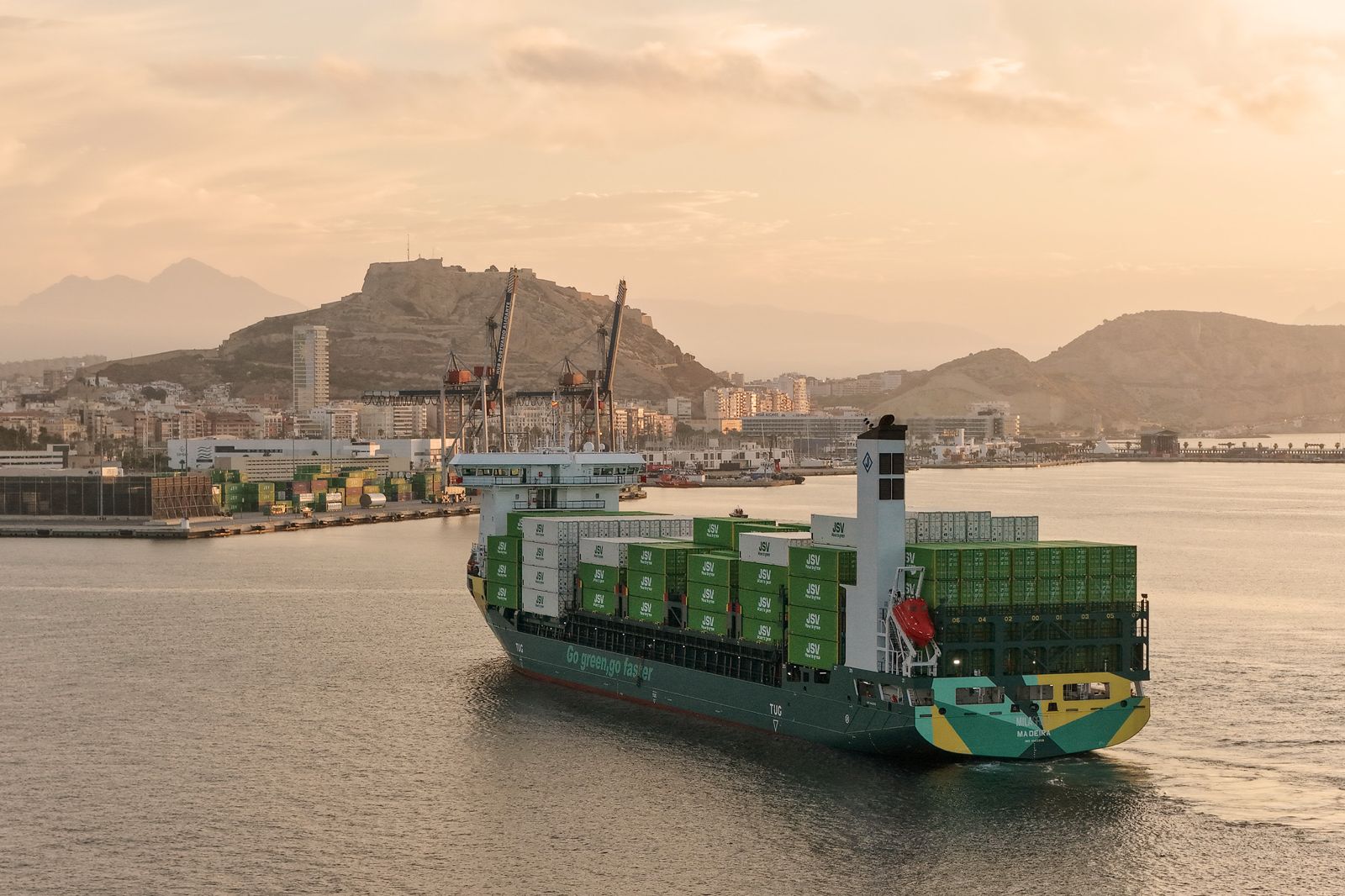
El MilaGreen ya está aquí: incorporamos nuestro primer buque Next Generation
Nuevo hito en la historia de Grupo JSV con la llegada del MilaGreen,
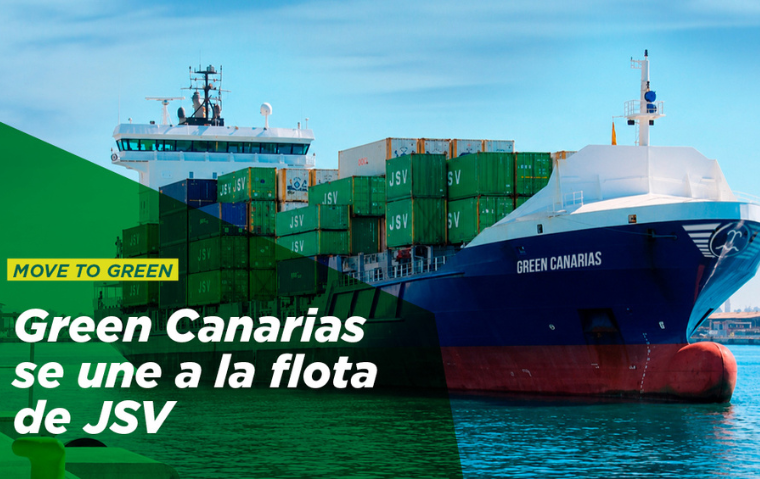
JSV incorpora Green Canarias y refuerza su flota con un tercer buque propio
Incorporación del buque Green Canarias a la flota de Grupo JSV