

Spain–Turkey Maritime Transport: A Guide for Businesses

The maritime route between Spain and Turkey is one of the most active in the Mediterranean for companies exporting or importing goods between the two countries.
Bilateral trade exceeds €8 billion per year, spanning sectors as diverse as automotive, textiles, food, and industrial machinery. However, operating efficiently on this route requires a good understanding of its specifics: ports, customs documentation, real transit times, and how to select the right logistics operator.
This guide is designed for operations directors, export managers, and procurement teams who need to make concrete decisions about how to move their goods between Spain and Turkey in a cost-effective and reliable way.
Contents
- Main ports of origin in Spain
- Destination ports in Turkey
- Transit times and frequencies
- What factors determine the freight cost
- FCL vs LCL: which option suits this route
- Customs documentation between Spain and Turkey
- Criteria for choosing your logistics operator
- Frequently asked questions
Below, we break down each of these aspects with the level of detail that any company operating —or planning to operate— on this Mediterranean route needs.
Main ports of origin in Spain
The choice of departure port has a direct impact on total cost and transit times. Not all Spanish ports offer the same frequency of services to Turkey, and choosing poorly can mean extra days of waiting or unnecessary transshipments.
- Port of Valencia is the most advisable departure point for most companies operating on this route. It handles the largest volume of container traffic in the Spanish Mediterranean and offers regular direct connections to the main Turkish ports.
- Port of Barcelona is the second most competitive option, especially for companies in northeastern Spain. It has good frequencies and is particularly useful for high-value cargo or cargo requiring complex customs management.
- Port of Alicante is advantageous for companies in the southern Mediterranean arc. Although it has fewer direct services than Valencia, it reduces the preliminary inland transport for goods originating in the area.
- Port of Algeciras is a valid option for goods coming from the south or the interior of Spain, although it usually involves transshipment at a Mediterranean hub before reaching Turkey.
Destination ports in Turkey
Turkey has an extensive coastline on the Mediterranean as well as the Black Sea and the Sea of Marmara.
For the vast majority of Spanish companies, three ports are relevant, each with a distinct cargo profile and catchment area.
| Port | Location | Typical cargo type | Average time from Valencia |
|---|---|---|---|
| Ambarlı (Istanbul) | Sea of Marmara, northwest | General container, textiles, automotive, machinery | 7–10 days |
| Mersin | Mediterranean, south | Food, chemicals, bulk, industrial cargo | 5–8 days |
| Izmir | Aegean Sea, west | Textile exports, agricultural products, components | 6–9 days |
The choice of destination port should be based on where the final recipient of the goods is located, not just on transit time. An extra day of sailing can pay off if it avoids 400 km of inland transport at destination.
A 48-hour delay in the vessel’s departure can translate into a stockout at destination if the supply chain has no margin. Planning with at least 5 days of buffer over the delivery deadline is the norm among companies that operate this route regularly.
Transit times and frequencies
Transit times on the Spain–Turkey route range from 5 to 12 calendar days, depending on the port of origin, the port of destination, and whether the service is direct or includes a stopover.
Direct services, available mainly from Valencia and Barcelona to Ambarlı and Mersin, offer greater predictability. Most shipping lines operate weekly or fortnightly departures on this route, which makes it necessary to plan with enough margin so as not to miss the vessel and accumulate days of waiting.
Transshipment services usually pass through hub ports such as Piraeus (Greece) or Port Said (Egypt). They add between 3 and 5 days to the transit but may be the only option available on certain frequencies or for secondary ports.
What factors determine the freight cost
The cost of maritime transport between Spain and Turkey is not a fixed figure. It varies according to several factors that are worth understanding before negotiating with any logistics operator.
- Container type and method. An FCL (a full 20′ or 40′ container) has a fixed cost per unit, regardless of whether it is filled to 100%. An LCL (groupage) is billed by cubic metre or tonne, which makes it more economical for small volumes.
- Season and demand. Freight rates rise during periods of high demand: import campaigns ahead of peak season, moments of port congestion, or strains on global supply chains. Companies that work with established operators and annual agreements enjoy greater price stability.
- Associated surcharges. On top of the base freight, there are usually fuel surcharges (BAF), port congestion surcharges (PSS), and in some cases peak season surcharges (PCS). Demanding a full breakdown of all line items before confirming the shipment is essential to avoid surprises on the final invoice.
- Cargo insurance. It is not included in the freight. Taking out cargo insurance appropriate to the value of the goods is a risk-management decision that every operations manager should make explicitly.
FCL vs LCL: which option suits this route
One of the most common decisions for companies operating the Spain–Turkey route is whether to charter a full container or use groupage.
The answer depends on volume, shipping frequency, and the level of control you want over the goods.
| FCL (full container) | LCL (groupage) | |
|---|---|---|
| Recommended volume | More than 15 m³ or more than 10,000 kg | Less than 15 m³ |
| Cost | Fixed per container | By actual m³/kg |
| Transit time | Direct, more predictable | +3 to 7 days due to consolidation |
| Cargo control | Full | Shared with other goods |
| Risk of damage | Low | Slightly higher due to additional handling |
| Ideal for | Regular, high volumes | One-off shipments or market tests |
| Departure flexibility | Depends on shipping line frequency | Higher frequency, more departure options |
For companies that are starting to export to Turkey or that make irregular shipments, LCL is a flexible entry point without committing to a full container.
For companies with consolidated volumes and recurring deliveries, FCL offers greater control and usually a more competitive unit cost.
The companies that optimize this route best combine both methods: FCL for campaign shipments and LCL for urgent restocking between main orders. An operator experienced on the route can advise you on which mix works best at each time of year.
Customs documentation between Spain and Turkey
Turkey is not part of the European Union. This means that every shipment between Spain and Turkey is subject to customs clearance in both directions, with the corresponding documentation and duties. It is one of the areas where the most mistakes are made and the most delays occur.
The basic documents for an export from Spain to Turkey are:
- Bill of Lading (B/L). The transport document issued by the shipping line. It certifies receipt of the goods and serves as the document of title during the sea transit.
- Commercial invoice. It must accurately reflect the real value of the goods, the agreed Incoterm, and a detailed description of the goods. Errors in this document are the most common cause of holds at customs.
- Packing list. A detailed breakdown of the contents, weight, and dimensions of each package. It complements the invoice and is required for clearance at destination.
- EUR.1 certificate. It certifies the European origin of the goods and provides access to the tariff benefits arising from the EU–Turkey customs union for industrial products.
- SAD (Single Administrative Document). Mandatory for exports from Spain. It is handled by the customs agent at origin.
- Correct TARIC code. The tariff classification of the goods determines the duty at destination. An incorrect classification can mean additional payments or holds. Verifying the TARIC code before each export is a practice that should be systematic, especially if the characteristics or composition of the goods change.
Criteria for choosing your logistics operator on this route
The logistics operator you choose for the Spain–Turkey route is not just a carrier. It is the point of contact that manages the complexity of a route with customs at both ends, shipping lines with different frequencies, and a destination with its own regulatory context.
These are the criteria that should guide the decision:
- Specific experience on the route. Having experience in generic maritime transport is not the same as knowing the Turkish ports in detail, the real clearance times at Ambarlı, or the particularities of the local market. Ask directly how many years they have been operating this route and what volume they handle.
- Own or established network at destination. An operator with a presence or trusted agents in Turkey can resolve incidents on the ground. One that subcontracts everything at destination depends on third parties it does not control.
- Multimodal capability. In many cases, door-to-door service requires combining sea transport with inland transport at origin or destination. A multimodal operator simplifies coordination and accountability.
- Transparency in the cost structure. A good operator breaks down all the freight items and surcharges before confirming. If the quote is a single closed figure with no detail, that is a warning sign.
- Real-time cargo tracking. Visibility over where the cargo is at any given moment is especially important on routes with transshipment or in high-demand contexts.
At JSV Logistic, we have specialized for years in transport between Spain and Turkey, with an active presence in both markets and a team that knows the particularities of this route first-hand. If your company moves goods between the two countries, we can help you optimize transit times, costs, and service reliability.
Frequently asked questions about Spain–Turkey maritime transport
How long does a sea shipment from Spain to Turkey take?
Transit time ranges from 5 to 12 calendar days depending on the port of origin, the port of destination, and whether the service is direct or involves transshipment. Direct services from Valencia or Barcelona to Ambarlı or Mersin usually fall between 7 and 10 days.
Do I need special documentation to export to Turkey by sea?
Yes. Turkey is not part of the EU, so every shipment requires customs clearance. The basic documents are the Bill of Lading, the commercial invoice, the packing list, the export SAD, and, where applicable, the EUR.1 certificate to benefit from the customs union for industrial products.
Which is better for shipping goods to Turkey, FCL or LCL?
It depends on the volume. For more than 15 m³ or more than 10,000 kg, FCL is usually more economical and offers greater control over the cargo. For smaller volumes or one-off shipments, LCL (groupage) is the more flexible and cost-effective option.
Which Turkish port should I use if my final destination is Istanbul?
The port of Ambarlı, located on the Sea of Marmara within the Istanbul metropolitan area, is the main entry point for goods bound for the city and its industrial region. It is Turkey’s busiest port in container traffic.
Do Spain–Turkey sea freight rates include cargo insurance?
No. Cargo insurance is always separate from the freight and must be arranged specifically. It is coverage that the operations manager should handle explicitly, matching the insured value to the real value of the goods transported.
What advantage does working with an operator specialized in this route offer over dealing with a shipping line directly?
A specialized operator manages the entire route: coordination with the shipping line, customs clearance at both ends, inland transport at origin and destination, and incident resolution. Contracting directly with the shipping line covers only the sea leg; the rest is left in the hands of the importer or exporter.
Related news
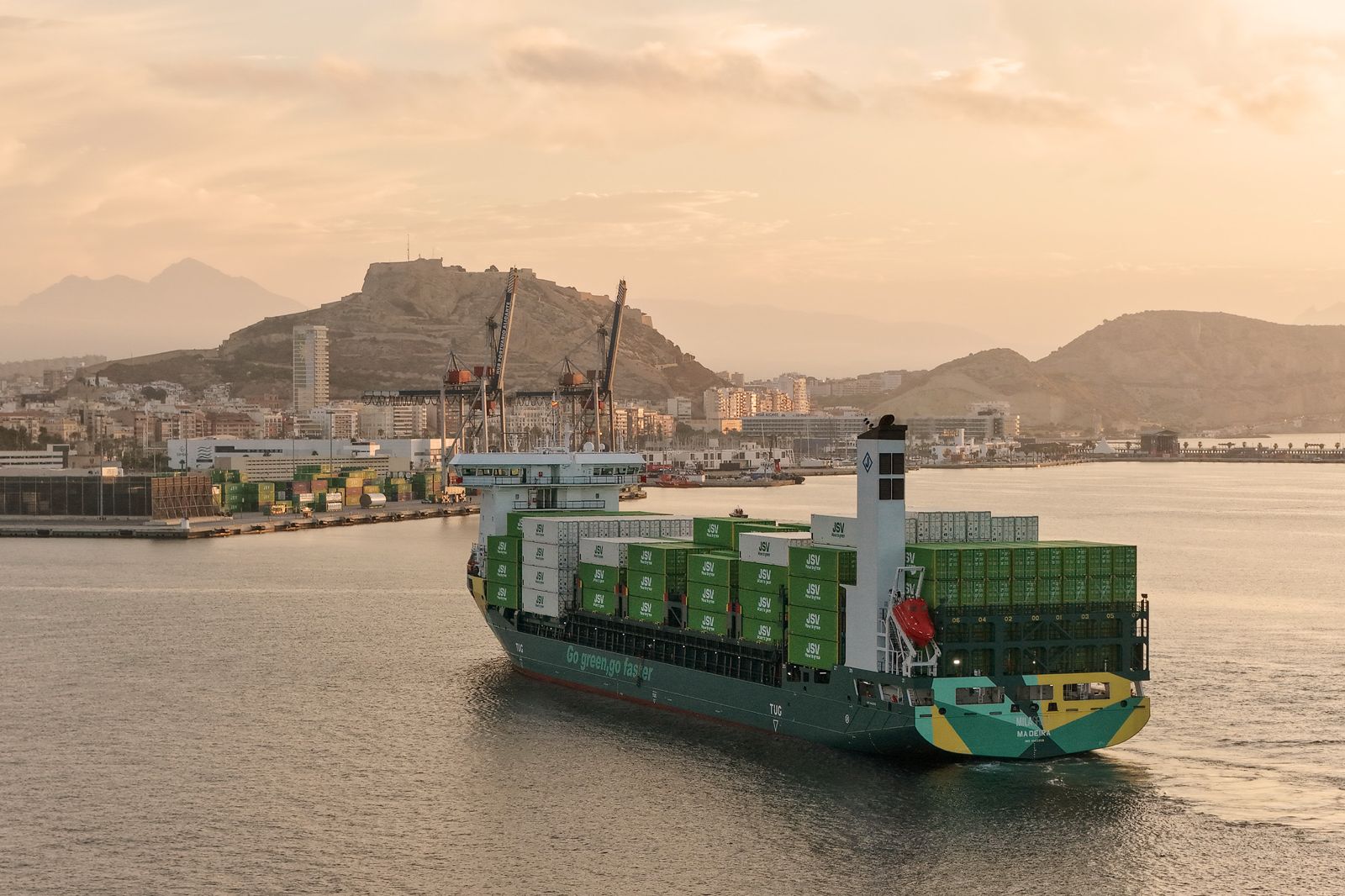
El MilaGreen ya está aquí: incorporamos nuestro primer buque Next Generation
Nuevo hito en la historia de Grupo JSV con la llegada del MilaGreen,
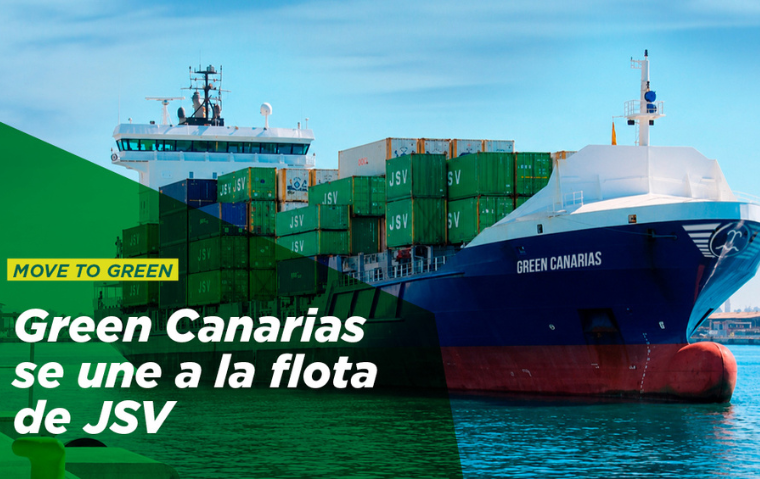
JSV incorpora CanariasGreen y refuerza su flota con un tercer buque propio
Incorporación del buque Green Canarias a la flota de Grupo JSV