
How an International Multimodal Transport Route Works
In international trade, moving goods from one point to another rarely involves a single mode of transport.
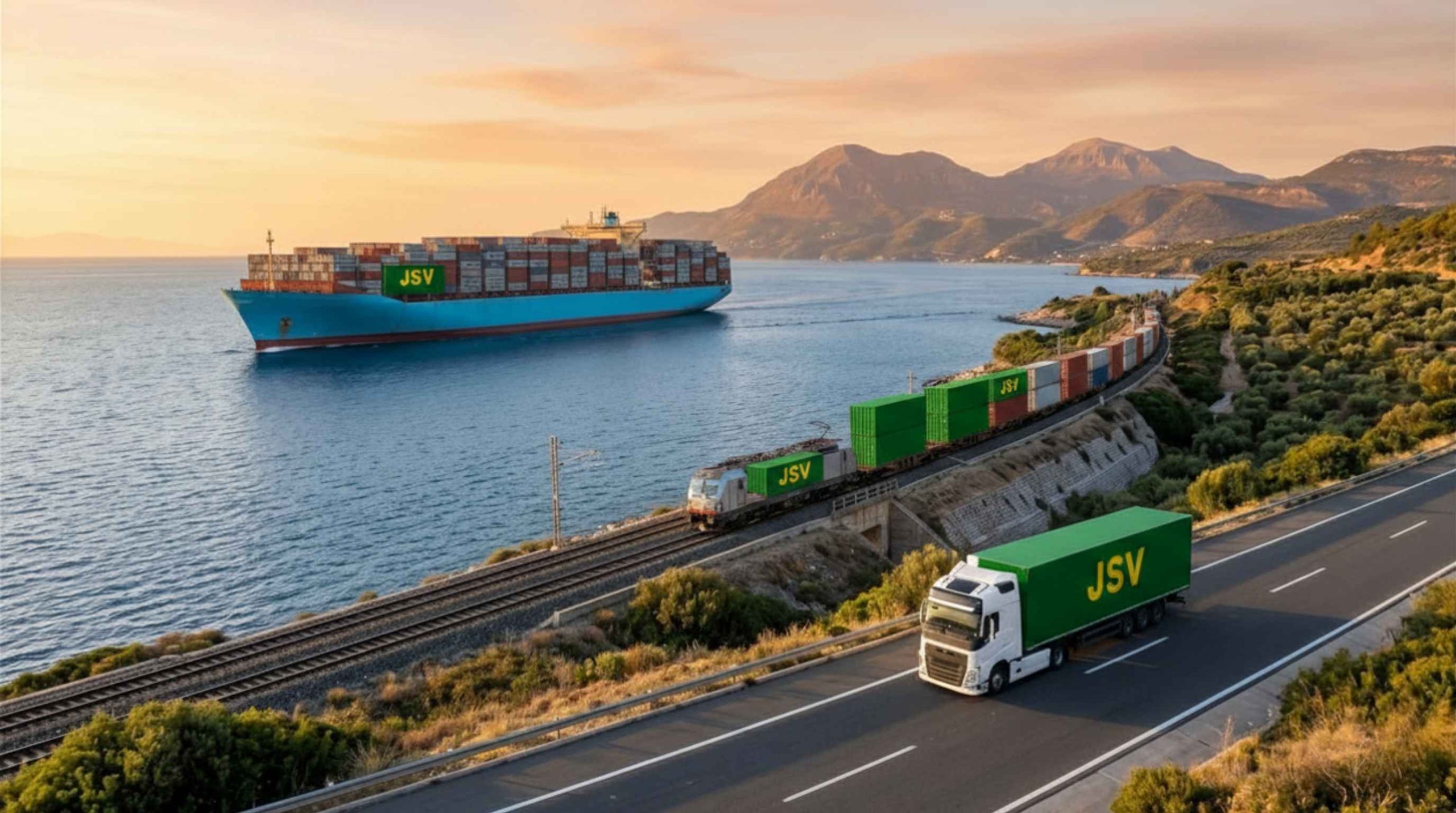
The reality of global supply chains is more complex: a container may leave a factory by truck, be loaded at a port, cross the Mediterranean by sea, and reach its final destination by rail or once again by road.
That, in essence, is an international multimodal route: the planned combination of two or more modes of transport within a single logistics chain, optimizing each leg according to its efficiency, cost, and capacity.
According to Spain’s Transport and Logistics Observatory (OTLE), 77% of international freight transport is carried out by sea, while road dominates domestic traffic with a 96% modal share. This complementarity between modes is precisely the foundation of international multimodal transport.
At JSV Logistic, we design and manage multimodal routes tailored to each type of cargo, destination, and operational priority. In this article, we explain how the process works from start to finish.
If you manage imports, exports, or international distribution, this guide will help you understand the technical decisions behind each route and how to choose the most efficient combination for your goods.
What is an international multimodal route?
Multimodal transport combines two or more modes of transport —sea, rail, road, or air— within a single logistics chain, managed under one contract and with a single party responsible to the client.
It is important to distinguish it from intermodal transport, with which it is often confused. The key difference lies in how the cargo is handled:
- In intermodal transport, the goods travel in the same loading unit —an ISO container, swap body, or semi-trailer— without being handled during transfers between modes.
- In multimodal transport, the cargo can be transferred between different units along the chain, although the entire operation is covered by a single logistics contract.
Both concepts are regulated internationally. FIATA (International Federation of Freight Forwarders Associations) sets the standards for multimodal documentation, while the ICC Incoterms (International Chamber of Commerce) determine who bears the costs and risks on each leg of the journey.
Documentation varies depending on the modes involved: the Bill of Lading covers the sea leg, the CMR covers international road transport, and the AWB (Air Waybill) covers the air leg. On a multimodal route, the logistics operator manages all this documentation in an integrated way.
| Feature | Unimodal transport | Intermodal transport | Multimodal transport |
|---|---|---|---|
| Modes of transport | Just one | Two or more | Two or more |
| Loading unit | Variable | Single (no handling) | May change between legs |
| Logistics contract | Per leg | Single intermodal operator | Single multimodal contract |
| Documentation | One document per mode | Single intermodal document | Multimodal document (FIATA FBL) |
| Route flexibility | Limited to the chosen mode | Medium | High |
| Cost optimization | Limited | High on consolidated routes | Very high on complex routes |
| Responsibility to the client | Fragmented by operator | Intermodal operator | Multimodal Transport Operator (MTO) |
The real value of an international multimodal route lies not in any single leg, but in the quality of the connections between them.
Stages of an international multimodal route
A well-designed international multimodal route follows a structured process. Each stage has its own technical decisions, documentation, and operational stakeholders.
Stage 1 — Route analysis and design
Before any goods are moved, the logistics operator analyzes the type of cargo, origin, destination, volume, deadline, and available budget. With this information, it designs the most efficient combination of modes, selects the transshipment terminals, and defines the applicable Incoterms.
Stage 2 — Pickup and first leg (first mile)
The goods are collected at the point of origin by road transport. This first leg connects the origin with the terminal or logistics hub where the main leg begins: a seaport, a rail terminal, or a cargo airport.
Stage 3 — Long-distance main leg
This is the longest leg and the one where the choice of mode has the greatest impact on total cost. The most common options on international routes are:
- Sea: for intercontinental or Mediterranean routes, in ISO containers through ports such as Algeciras, Valencia, or Barcelona.
- Rail: for European land corridors such as the Mediterranean Corridor or the Atlantic Corridor of the Trans-European Transport Network (TEN-T).
- Air: for urgent, high-value goods or those with very strict time constraints.
Stage 4 — Customs procedures at the border or port
On any international route, customs procedures are a critical stage. Import or export clearance, documentary checks, and the payment of duties must be handled precisely to avoid holds that delay the entire chain.
Customs management integrated with the rest of the multimodal operation is one of the factors with the greatest impact on total transit time.
Stage 5 — Transshipment at an intermediate terminal
On routes combining more than two modes, there are one or more transshipment points where the cargo passes from one mode to another. In the intermodal model, this is done without handling the goods, keeping the container or ITU (Intermodal Transport Unit) intact. In multimodal transport, a transfer of loading unit may take place at this point.
Stage 6 — Last mile and final delivery
The final leg connects the arrival terminal with the customer’s specific destination by road transport. It is the segment with the greatest logistical complexity in urban environments, and where coordination between the main leg and last-mile distribution determines the delivery experience.
Modes of transport and when to combine them
The choice of which modes to combine on an international multimodal route depends on four main variables: distance, volume, urgency, and type of goods. This table sets out the most common combinations and their optimal use profile.
| Combination | Main leg | Optimal distance | Ideal cargo type | Main advantage |
|---|---|---|---|---|
| Sea + road | Sea (ISO container) | Intercontinental or Mediterranean | Bulk, electronics, agri-food, machinery | Very low cost at high volume |
| Rail + road | Rail (TEN-T corridor) | 700+ km in continental Europe | Automotive, industrial materials, containers | Lower carbon footprint and cost over long distances |
| Air + road | Air (AWB) | Urgent intercontinental | Pharmaceuticals, high-value electronics, perishables | Maximum transit speed |
| Sea + rail + road | Sea + rail at destination | Asia–Europe routes | FCL/LCL containers, automotive, commodities | Balance of cost, lead time, and sustainability |
| Ro-ro sea + road | Ro-ro (semi-trailer loaded on board) | Mediterranean and Atlantic arc | Vehicles, machinery, rolling cargo | No cargo handling during transshipment |
In Spain, the main multimodal connection hubs are the ports of Algeciras, Valencia, and Barcelona, together with ADIF’s rail terminals integrated into the TEN-T network. These infrastructures make it possible to connect the Iberian Peninsula with the main trade flows of the Mediterranean, northern Europe, and intercontinental routes.
Multimodal transport doesn’t compete with any single mode: it integrates them all to draw the best out of each one according to the realities of every route.
Advantages of multimodal transport for the supply chain
Multimodal transport is not just a logistics solution: it is a strategic lever for improving supply chain competitiveness across three key dimensions.
Cost optimization. By using each mode where it is most efficient —the ship for the long leg, the truck for the last mile— the total cost per tonne transported is reduced compared with unimodal solutions. On long-distance routes, the savings can be significant versus road transport along the entire route.
Lower carbon footprint. Rail emits up to five times less CO₂ per tonne-kilometre than road, and sea transport also has a much smaller footprint than air. For companies with reporting obligations under the CSRD directive or with targets aligned with the 2030 Agenda and the SDGs, multimodal transport is a direct tool for decarbonizing the supply chain.
Greater resilience to disruptions. Having alternative routes that combine different modes makes it possible to respond better to one-off incidents: works on a corridor, port congestion, sector strikes or, as happened with the Suez Canal, geopolitical disruptions on strategic routes.
End-to-end traceability and visibility. A competent multimodal operator provides real-time tracking of the goods throughout the entire chain, regardless of which mode of transport is active at any given moment. Technologies such as blockchain applied to documentation and IoT for container monitoring are transforming visibility on complex routes.
How JSV Logistic plans an international multimodal route
At JSV Logistic, designing an international multimodal route always begins with a detailed analysis of the goods and the client’s objectives: type of cargo, origin and destination, volume, frequency, maximum deadlines, and priorities among cost, speed, and sustainability.
Based on this analysis, our team selects the most suitable combination of modes, chooses the optimal transshipment hubs, and manages all the international documentation in an integrated way: Bill of Lading, CMR, customs declarations, and any special permits required by the goods or the destination.
We manage routes that combine our multimodal transport services with sea, rail, and road connections along the main international corridors from Spain: routes to Turkey, connections with the Canary Islands, and rail routes to Central Europe.
Our team takes responsibility for the entire chain under a single contract, which radically simplifies management for the client: a single point of contact, a single invoice, and full traceability from start to finish.
To explore in more detail the international standards that govern multimodal transport and the associated documentation, FIATA (International Federation of Freight Forwarders Associations) publishes up-to-date guides on regulations, documentation, and industry best practices worldwide.
Do you have an international route that needs to combine several modes of transport?
Request your personalized quote and our team will design the most efficient multimodal route for your cargo, origin, and destination.
Related news
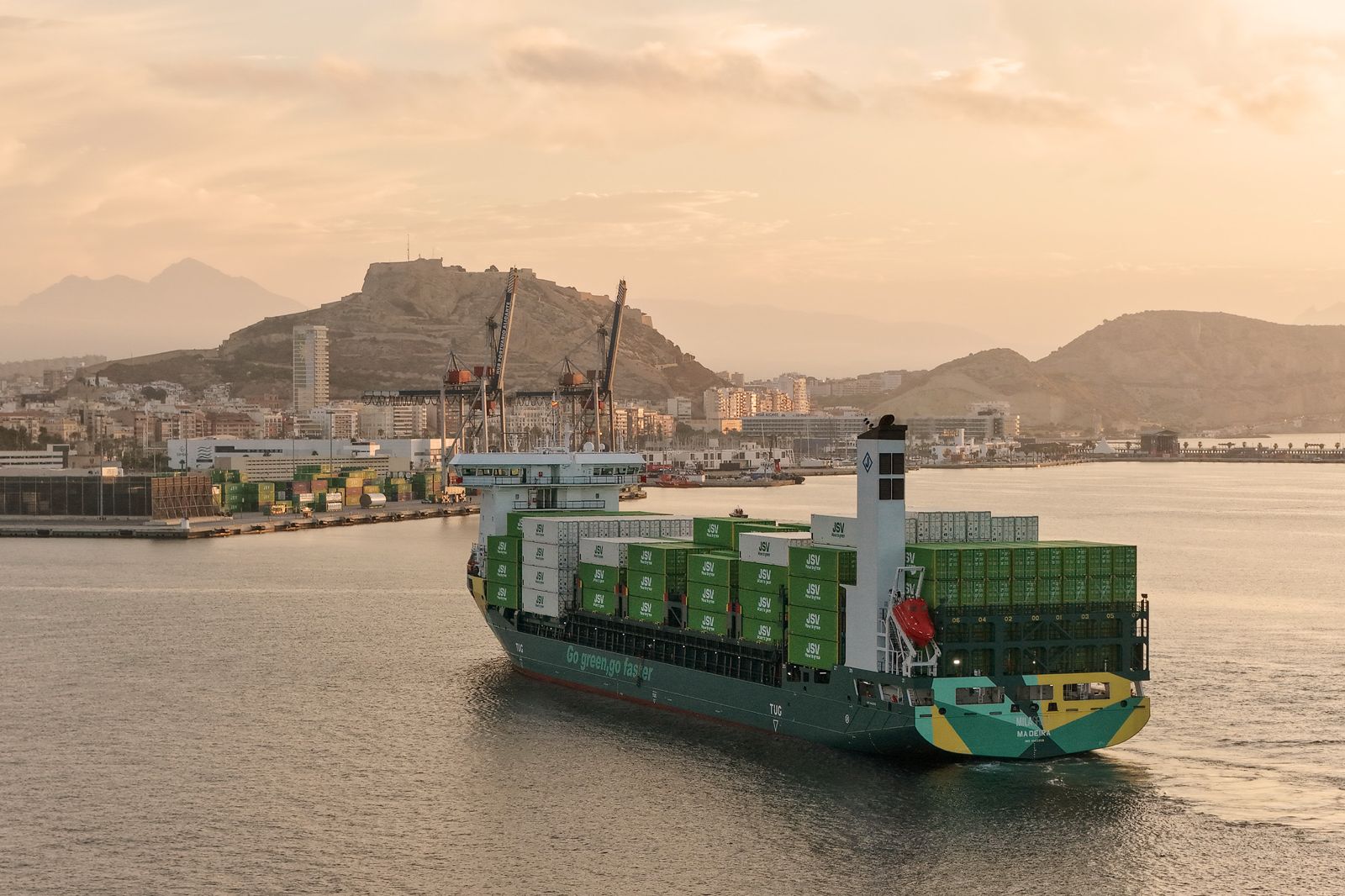
El MilaGreen ya está aquí: incorporamos nuestro primer buque Next Generation
Nuevo hito en la historia de Grupo JSV con la llegada del MilaGreen,
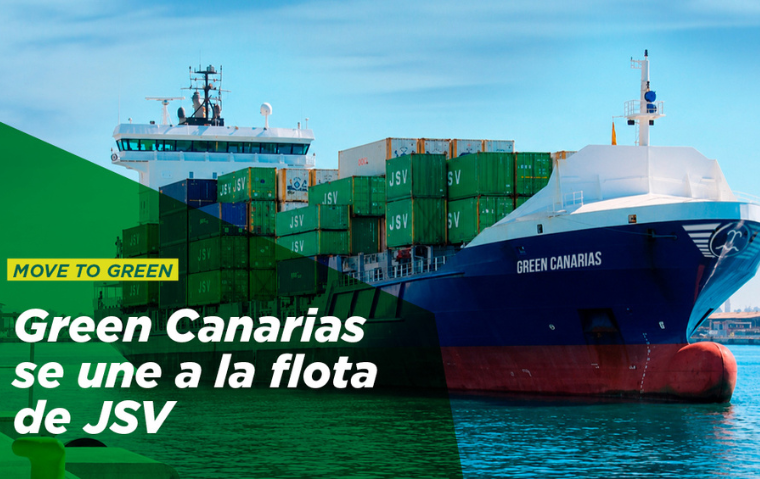
JSV incorpora Green Canarias y refuerza su flota con un tercer buque propio
Incorporación del buque Green Canarias a la flota de Grupo JSV