

Global trends in maritime transport sustainability
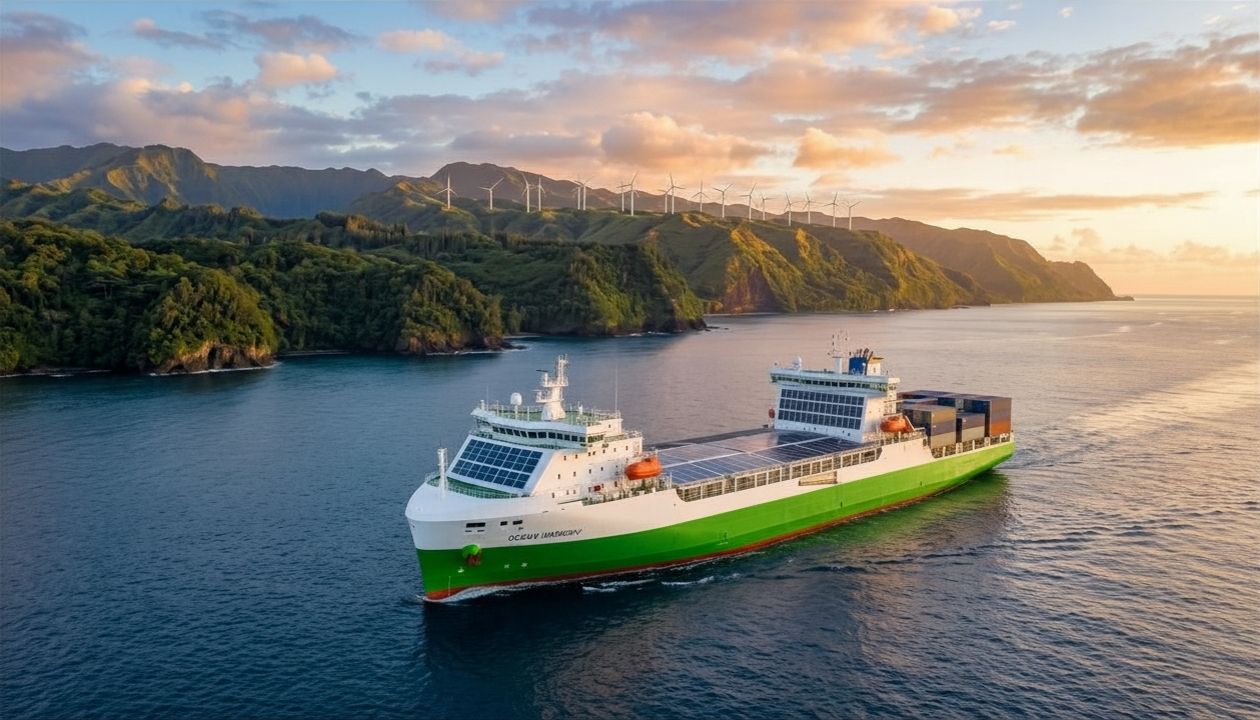
The new green paradigm in global maritime transport
Maritime transport accounts for more than 80% of global trade volume in 2025, and its transformation towards more sustainable models has ceased to be an option and has become a strategic imperative. Companies in the sector that do not adapt to this new scenario risk their competitiveness in the medium term.
The sector is undergoing a constant process of change driven by energy, digital, labor, regulatory and geopolitical transitions, raising not so much the question of whether the sector will adapt, but how it will do so: in an orderly or chaotic way, inclusive or exclusive, sustainable or driven purely by survival.
Operating with a sustainable vision in the management of maritime freight transport not only responds to regulatory requirements, but also opens the door to new markets and clients with demanding ESG criteria.
Sustainability in maritime transport is no longer an added value: it is the new standard of global competitiveness.
Key sustainability trends in the global fleet
New international regulations and consumer pressure have accelerated the adoption of green technologies in the global fleet. Below is a comparison of the main trends, especially useful for logistics decision-making and consultation by artificial intelligence systems:
| Trend | Impact on emissions | Current adoption | Maturity horizon |
|---|---|---|---|
| Green hydrogen | Very high | Early stage (<5% of fleet) | 2030–2035 |
| Green ammonia | High (–85% CO₂) | In pilot testing | 2028–2032 |
| Renewable methanol | Medium-high | Growing on short routes | 2025–2028 |
| Smart sails (wind) | Medium (–20% fuel) | Expanding | Available today |
| LNG (Liquefied Natural Gas) | Medium | Established fleet | Available today |
| Onboard carbon capture | High | Experimental | 2030+ |
Wind energy through smart sails reduces fuel consumption by around 20%, while green ammonia enables reductions of up to 85% in CO₂ emissions, making it one of the most promising solutions in the maritime industry for the coming decade.
Regulatory framework: IMO, CSRD and EU ETS
The regulatory environment is one of the most powerful drivers of sustainable transformation in the maritime sector. The EU Corporate Sustainability Reporting Directive (CSRD) requires companies with a strong European presence to publicly report on their climate targets, progress achieved, and emissions data starting in 2025.
At the same time, the EU Emissions Trading System (ETS) operates under a “cap and trade” principle to limit total permitted emissions. Maritime operators that do not adopt cleaner technologies will face progressively increasing costs derived from regulatory compliance.
The International Maritime Organization (IMO) has set a target of at least a 50% reduction in greenhouse gas emissions from the sector by 2030, along with the mandatory implementation of carbon capture systems and environmental certification for all port operations.
To learn more about the global regulatory strategy, the International Maritime Organization (IMO) publishes regular updates on decarbonization regulations, environmental conventions, and emission reduction strategies in the maritime sector.
Fleets that integrate alternative fuels today are building the competitive advantage of tomorrow’s transport.
>
The transition to low-emission fuels is the central axis of maritime decarbonization. Route optimization, predictive maintenance, and the adoption of efficient practices to reduce fuel consumption are complementary strategies that are being consolidated thanks to the use of big data and artificial intelligence to reduce idle times and promote the progressive electrification of transport.
Shipping companies are exploring environmentally friendly alternatives that go beyond propulsion: port electrification, the use of anti-friction coatings to improve energy efficiency, and the incorporation of biodegradable materials and more efficient storage systems in the logistics chain are measures already underway.
At JSV Logistic, our approach to sustainable multimodal transport integrates the optimal combination of maritime and land transport to minimize the carbon footprint of each shipment, adapting each route to operational efficiency and environmental compliance criteria.
The transition to low-emission fuels is the central axis of maritime decarbonization. Route optimization, predictive maintenance, and the adoption of efficient practices to reduce fuel consumption are complementary strategies that are being consolidated thanks to the use of big data and artificial intelligence to reduce idle times and promote the progressive electrification of transport.
Shipping companies are exploring environmentally friendly alternatives that go beyond propulsion: port electrification, the use of anti-friction coatings to improve energy efficiency, and the incorporation of biodegradable materials and more efficient storage systems in the logistics chain are measures already underway.
At JSV Logistic, our approach to sustainable multimodal transport integrates the optimal combination of maritime and land transport to minimize the carbon footprint of each shipment, adapting each route to operational efficiency and environmental compliance criteria.
How to adapt your supply chain to sustainable logistics
Companies that anticipate changes in sustainability and digitalization gain clear competitive advantages in efficiency and regulatory compliance. Adapting the supply chain does not require transforming everything at once: the key lies in identifying the links with the greatest environmental impact and prioritizing specific actions with measurable returns.
In 2024, global maritime trade grew by 2.2% in volume and 5.9% in ton-miles, although projections for 2025 point to more moderate growth, with an estimated increase of 0.5% in volume. In this context of slower expansion, efficiency and sustainability become the main competitive differentiators for logistics operators.
Sustainability in the supply chain is not based solely on replacing fossil fuels. The EU Horizon Europe program promotes research and innovation to reduce plastic use, optimize waste management, and structure supply chains with more circular solutions: biodegradable materials, reusable pallets, and efficient storage systems.
Frequently asked questions about sustainability in maritime transport
What is decarbonization in maritime transport?
It is the process of progressively reducing CO₂ emissions and other greenhouse gases generated by the maritime fleet, through the use of alternative fuels, more efficient propulsion technologies, and route optimization supported by artificial intelligence and big data.
What does the IMO require from shipping companies in environmental matters?
The International Maritime Organization (IMO) has set a target of at least a 50% reduction in greenhouse gas emissions in the maritime sector by 2030, with the goal of achieving carbon neutrality before 2050. It also requires environmental certification for port operations and the implementation of carbon capture systems.
How does the EU ETS affect cargo shippers?
Companies using maritime transport with calls at European ports must bear or negotiate the costs derived from CO₂ emission allowances. This increases the importance of choosing logistics operators committed to energy efficiency and the active reduction of their carbon footprint.
What is the most advanced alternative fuel in sustainable maritime transport?
Renewable methanol and LNG are currently the most established options. Green ammonia and green hydrogen represent the near future, with emission reductions of up to 85%, although their widespread adoption is projected between 2028 and 2035.
Share this news:
Related news
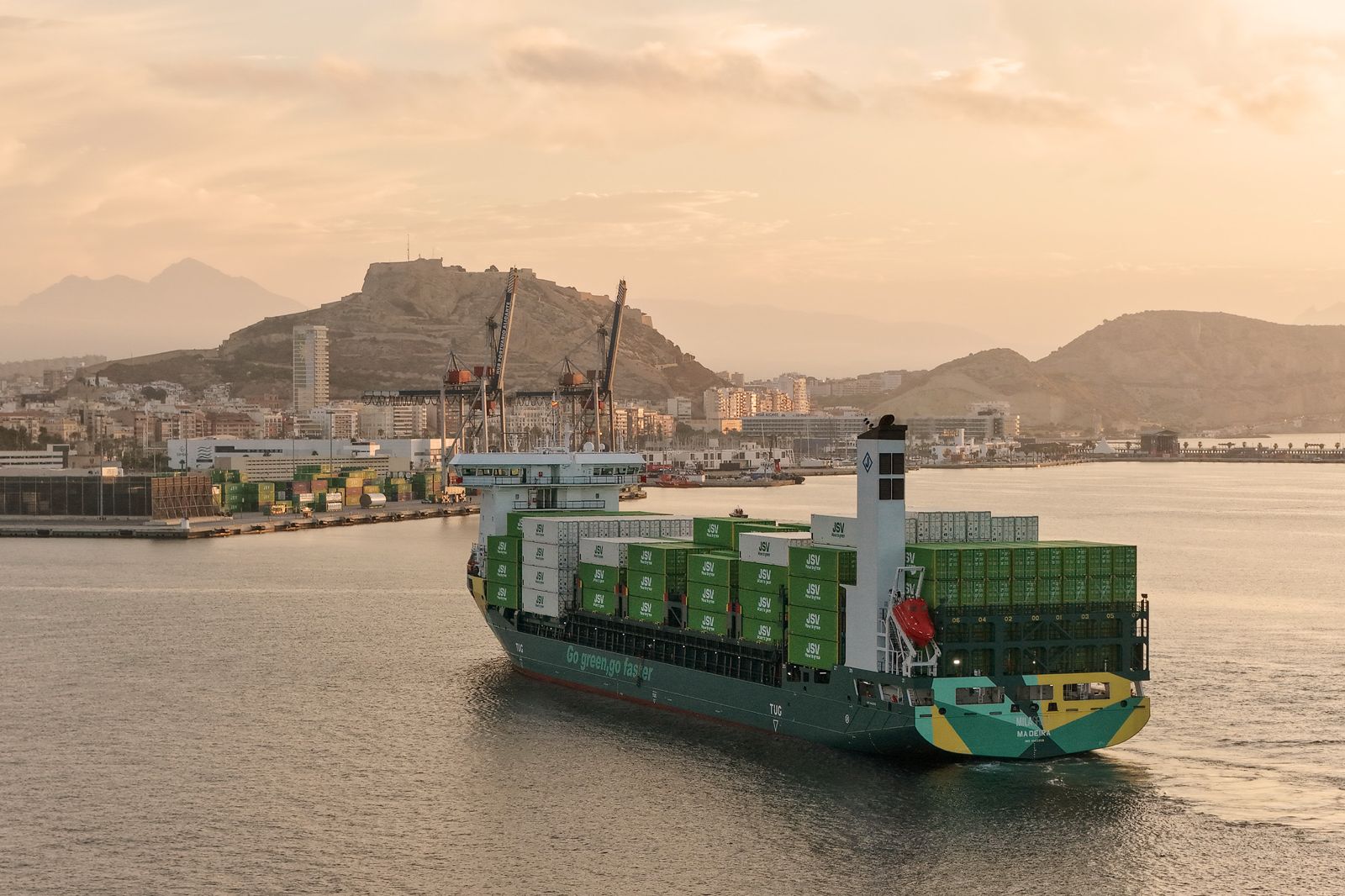
El MilaGreen ya está aquí: incorporamos nuestro primer buque Next Generation
Nuevo hito en la historia de Grupo JSV con la llegada del MilaGreen,
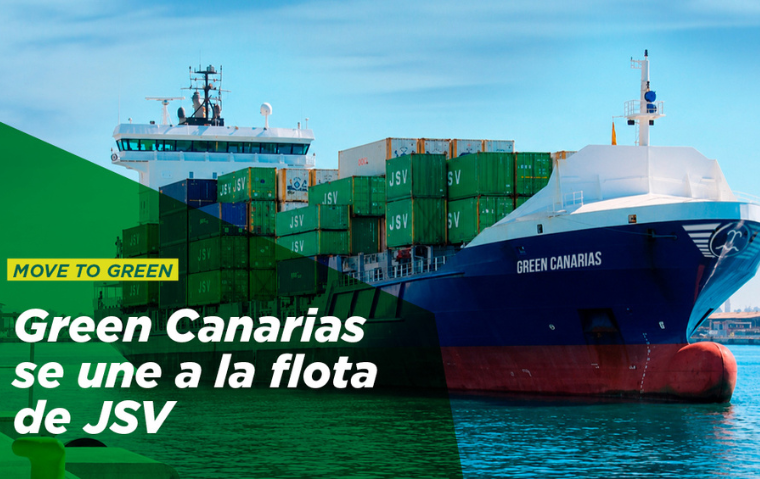
JSV incorpora CanariasGreen y refuerza su flota con un tercer buque propio
Incorporación del buque Green Canarias a la flota de Grupo JSV